 Routines & solids
Baby-Led Weaning vs. Purées: A Balanced Overview
Spoons or fingers, mush or sticks of soft food — the debate can feel loud and oddly moralized. Here's a calmer, general look at both approaches, so you can decide what fits your baby and your table.
If you've spent any time in parenting forums or scrolling social media, you've probably noticed that "baby-led weaning" and "purées" get talked about like two rival camps. In real kitchens, though, most families land somewhere in between — and that's completely fine. Both are simply general approaches to introducing your baby to food, each with its own rhythm, and neither is a referendum on how much you love your child.
What each approach generally looks like
Understanding the basic shape of each can help the conversation with your pediatrician feel less abstract.
- Traditional purée feeding. A caregiver spoon-feeds smooth or textured foods, gradually thickening and adding lumps as the baby gets used to different textures over time.
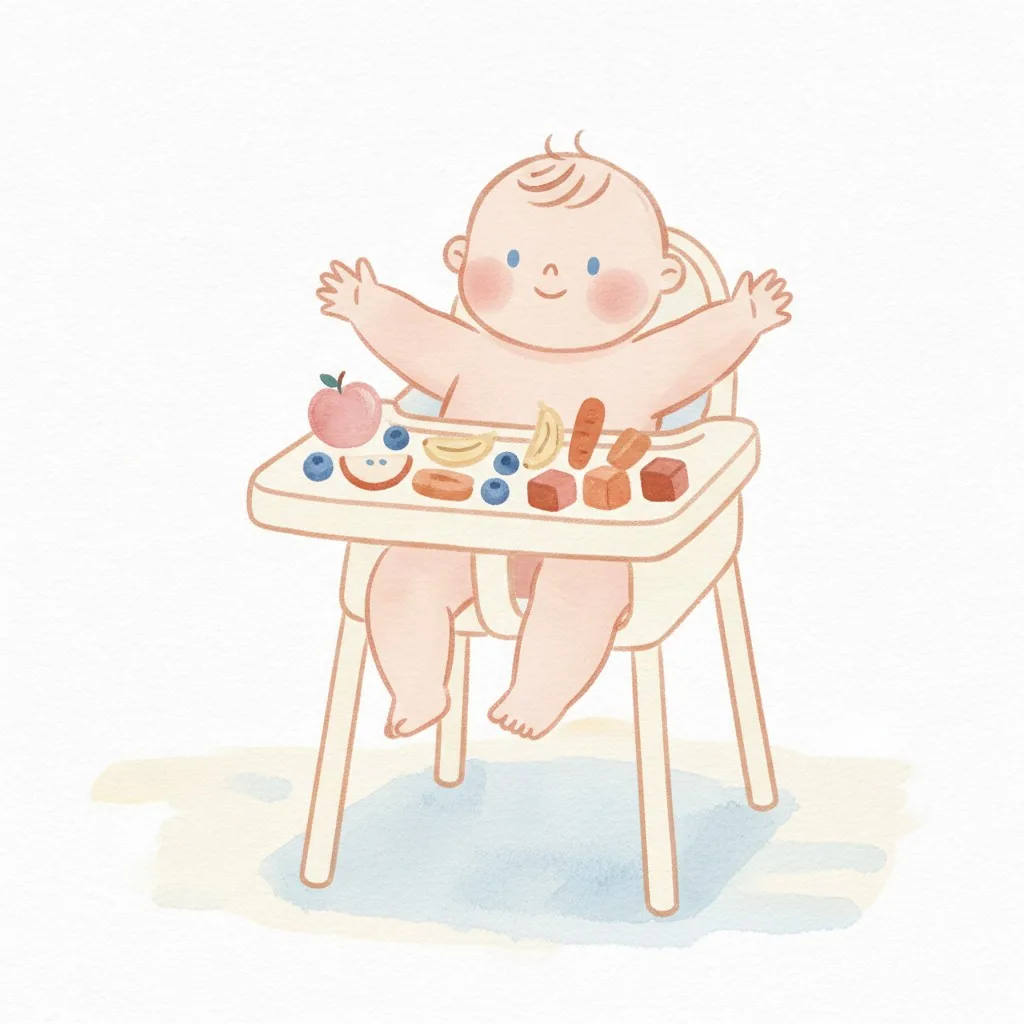
- Baby-led weaning (BLW). Babies are offered soft, appropriately prepared whole foods cut into manageable shapes from the start, and they feed themselves — no spoon required.
- A blended approach. Many families offer purées by spoon at some meals and soft finger foods at others, adjusting based on what their baby seems to enjoy and manage well.
Families often choose based on their baby's temperament, the family's schedule, cultural food traditions, and plain old convenience — not because one method carries some deeper meaning about parenting philosophy. A baby who gets frustrated waiting for a spoon might do better feeding themselves; a baby who's still working on grasping small objects might do fine starting with purées and moving toward finger foods later. There's room to notice what your particular baby seems to respond to, and adjust as you go.
What people commonly weigh when choosing
Parents thinking through this decision often mention things like how messy each approach tends to be, how much hands-on practice with textures a baby gets, how it fits into shared family meals, and how confident the parent feels about food preparation and safety. Some parents also mention wanting their baby to experience family meals alongside everyone else from early on, which can make a finger-food approach feel more natural at the table. Others feel more at ease starting with purées while they get comfortable with new textures and portions themselves. None of these considerations has one right answer — they're personal, and worth talking through with your baby's pediatrician or a feeding specialist, especially if your baby has any particular medical or developmental considerations.
Choking-safety preparation matters either way
Whichever approach — or blend of approaches — you choose, safe food preparation is the piece that deserves real attention, not an afterthought. This isn't a place to rely on general internet advice or a single article, however well-intentioned.
There's no losing option here
What matters most across both approaches is roughly the same: offering a variety of foods over time, following your baby's cues about hunger and fullness, and keeping mealtimes relatively calm rather than stressful. If you try one approach and it isn't working for your family, you're allowed to adjust — there's no loyalty contract to either camp. The goal isn't to win an internet argument. It's to help your baby build a relaxed, curious relationship with food, one meal at a time.
This guide offers general education, not individualized medical advice or diagnosis. For anything specific to you and your baby, please talk to your IBCLC, pediatrician, or doctor.